

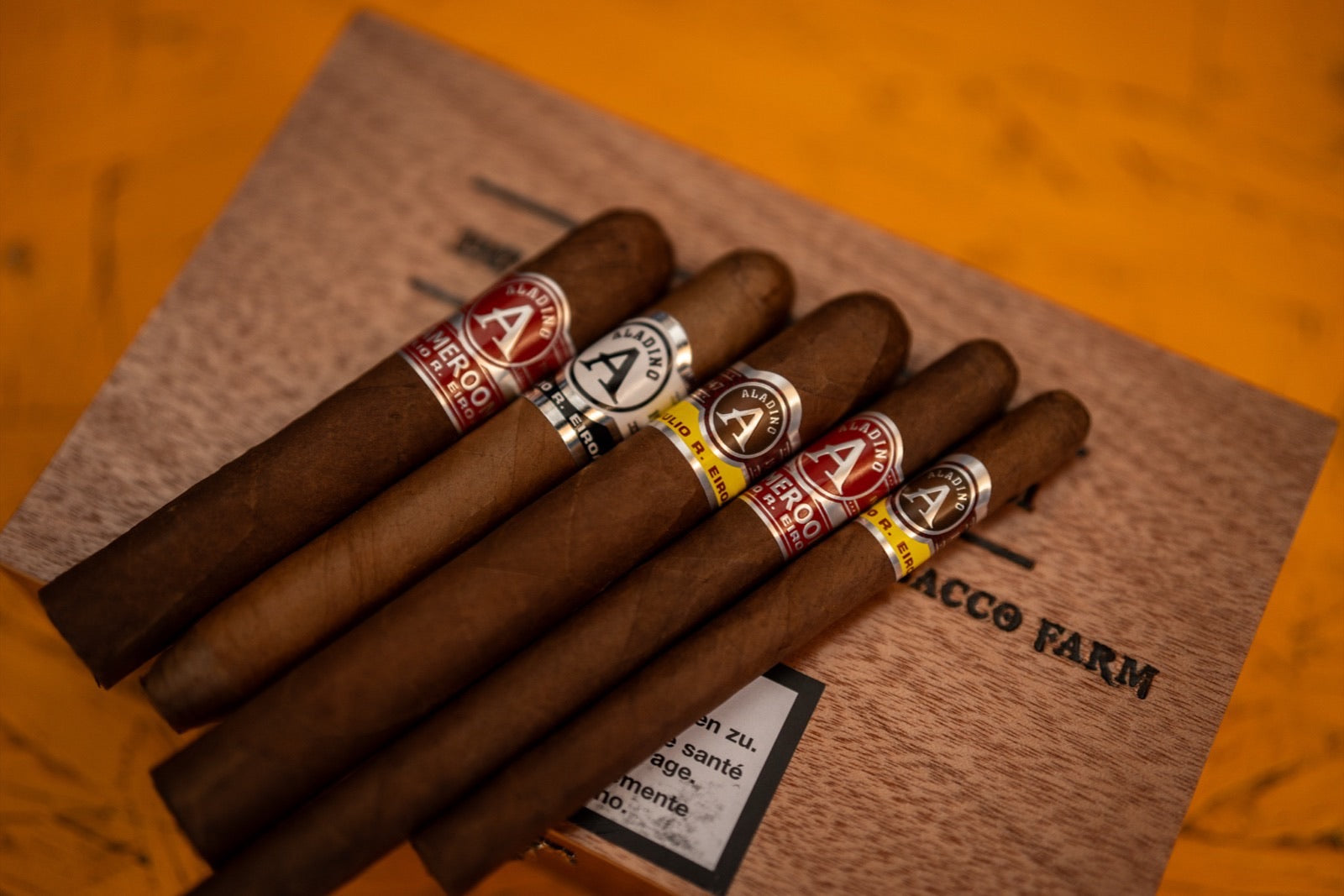
Aladino is the Eiroa family's tribute to old-school Honduran cigarmaking — a puro built around Authentic Corojo tobacco grown on their own farms in the Jamastran Valley, rolled exactly as the great Honduran cigars of the 1960s and 70s once were. If you want the unhurried, naturally sweet character of true Corojo without modern shortcuts, Aladino is the most honest expression of it on the market today.
- Aladino is made by Julio Eiroa and his son Justo Eiroa (JRE Tobacco Co.) in Danlí, Honduras, using estate-grown Authentic Corojo seed.
- The flagship Corojo line is medium to full, with cedar, leather, dried fruit and a hallmark gentle sweetness.
- The Cameroon line adds spice and a toasty, slightly nutty warmth; the Connecticut line is the mild, creamy morning option.
- Vitolas run from petite formats to a 7-inch Churchill, so there is a smoke for every occasion and every length of time.
- Store all of them at 68–72% relative humidity and let boxes settle for a few weeks before smoking.
Who makes Aladino, and why does it matter?
Aladino comes from the Eiroa family, one of the most respected names in Honduran tobacco. Julio Eiroa has farmed in the Jamastran Valley for decades, and Aladino is his and son Justo's deliberate return to the way cigars were made before machinery and blending fashions changed the craft. The name nods to the cinema Julio's family once ran, and the whole project is rooted in nostalgia for authenticity.
What sets the brand apart is vertical control: the Eiroas grow the tobacco, age it, and roll it themselves. Crucially, they cultivate Authentic Corojo — seed they trace directly to the original Cuban-descended Corojo — rather than the hybridised versions widely planted elsewhere. That single decision is the reason Aladino tastes the way it does.

What does the Aladino Corojo line taste like?
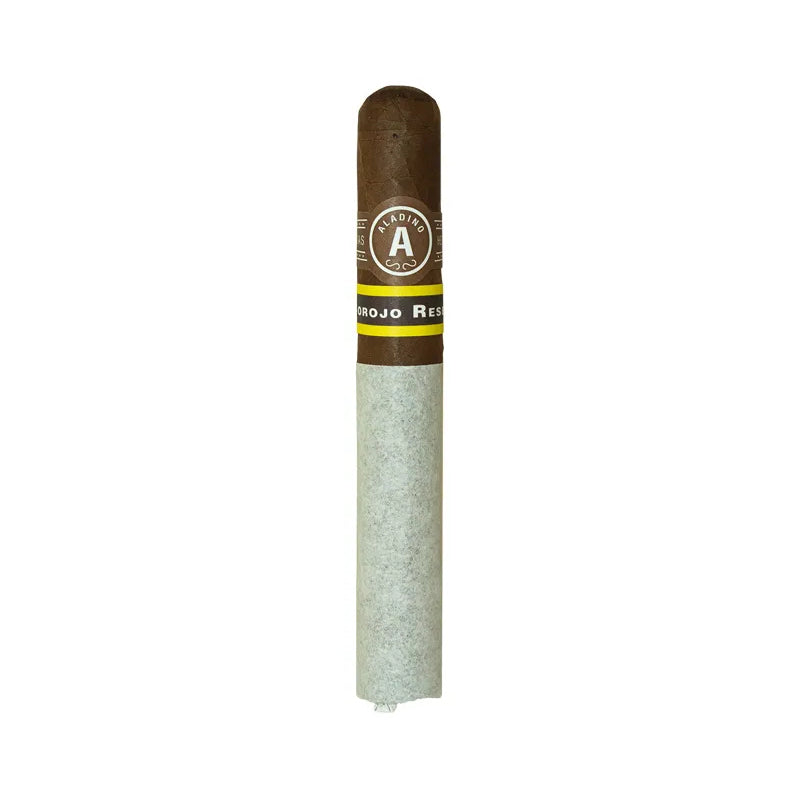
The Corojo line is the heart of the brand and the place most enthusiasts begin. Expect a medium-to-full profile led by cedar and toasted bread, layered with leather, black pepper, cocoa and a recurring note of dried stone fruit. The defining trait is balance: the strength never tips into harshness, and a soft natural sweetness threads through every puff.
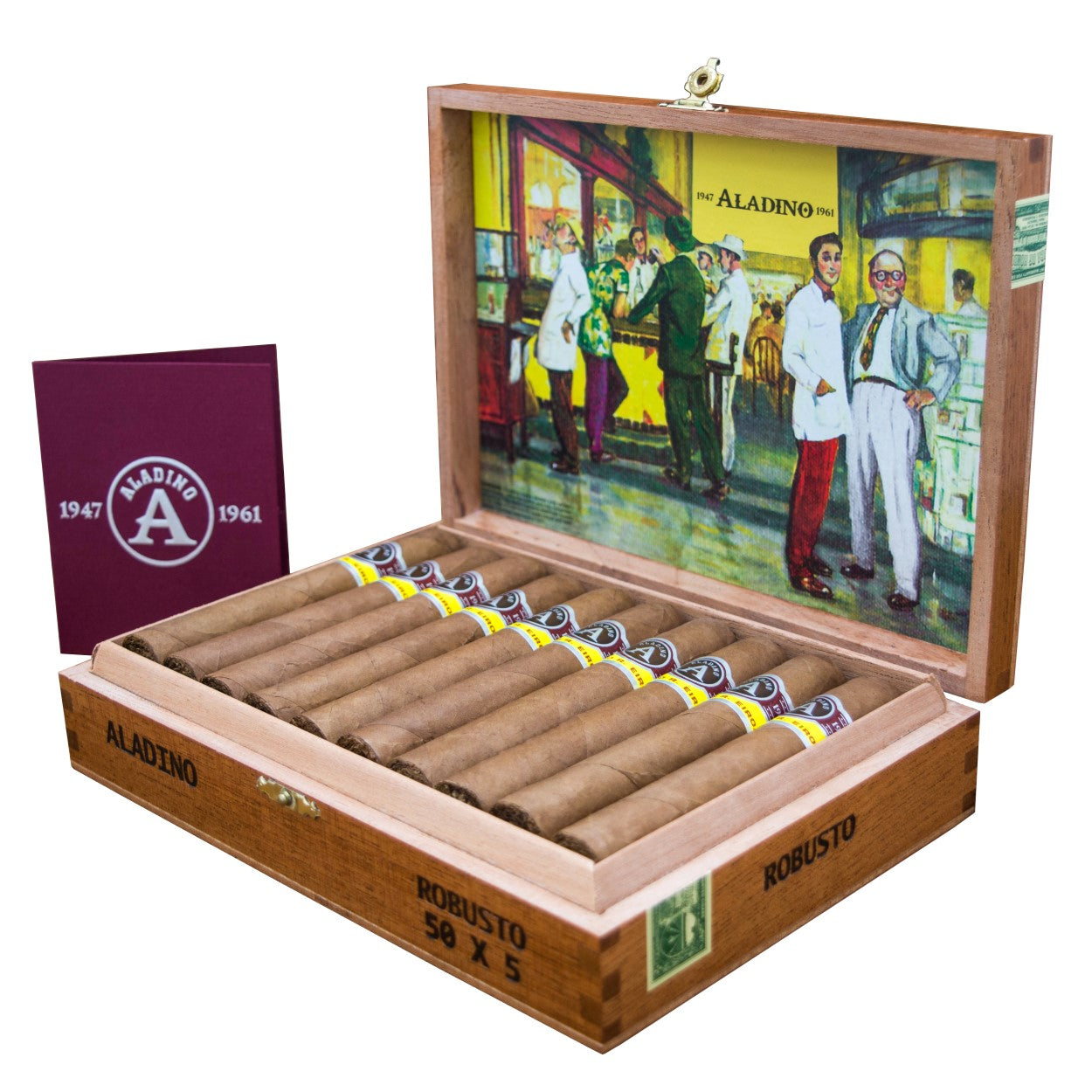
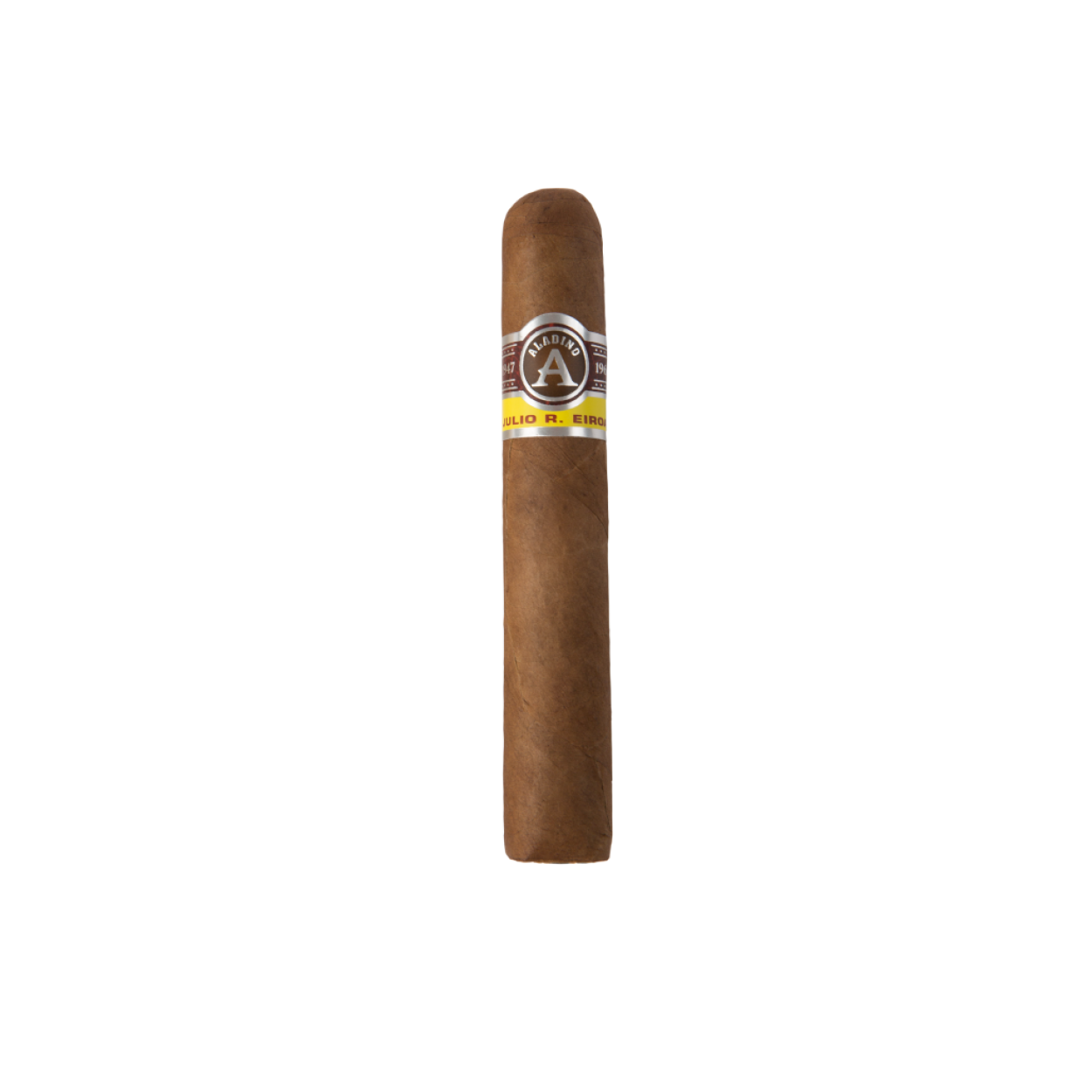
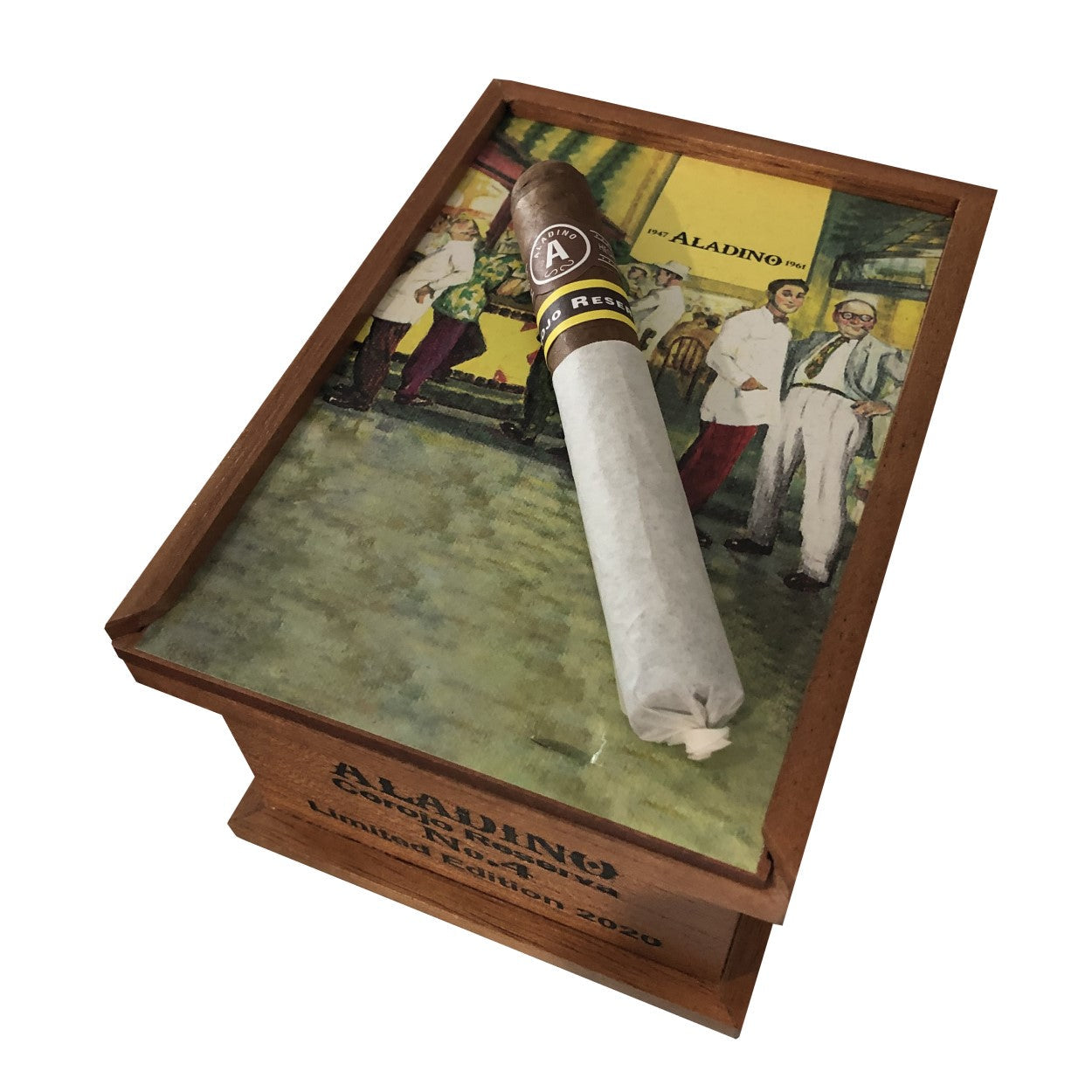
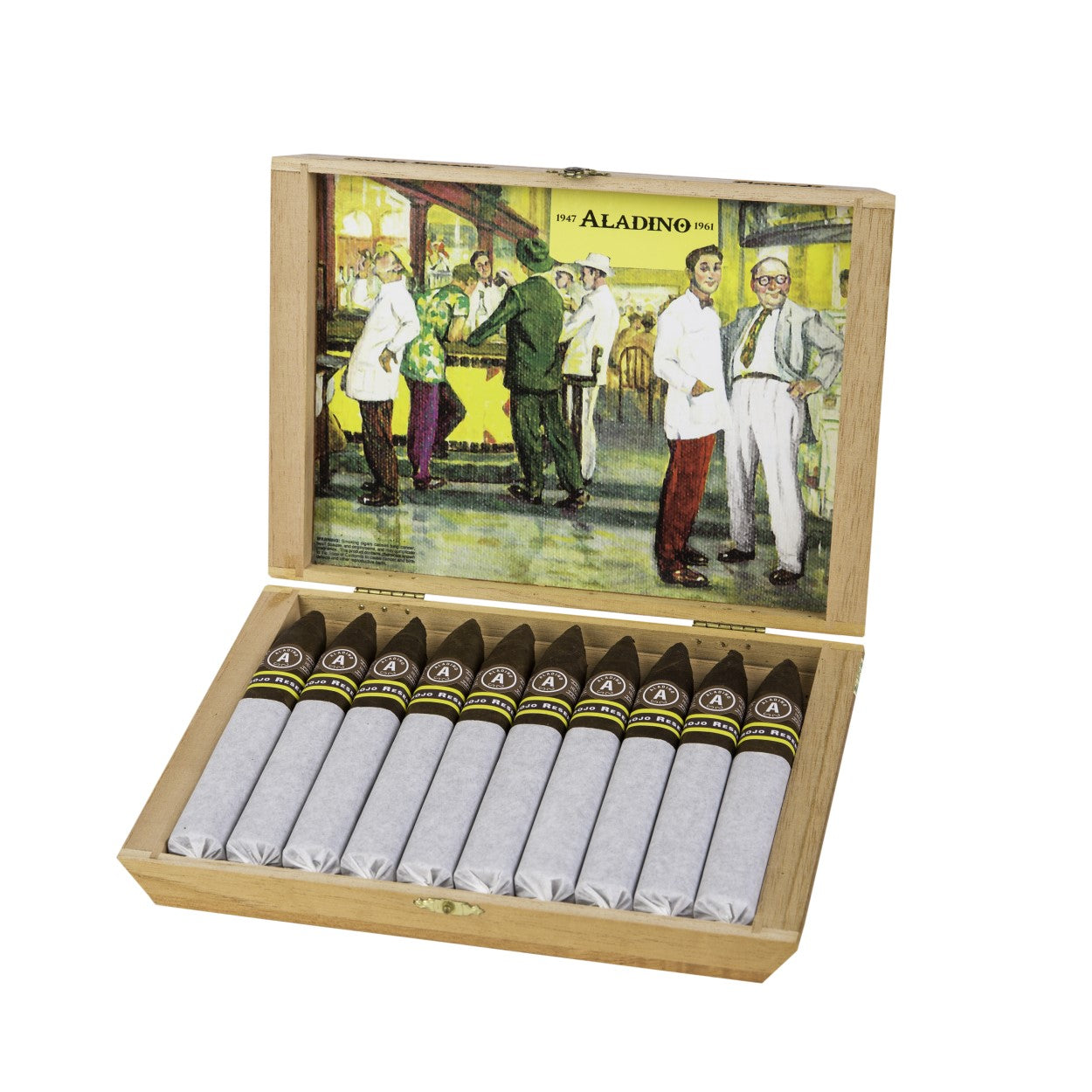
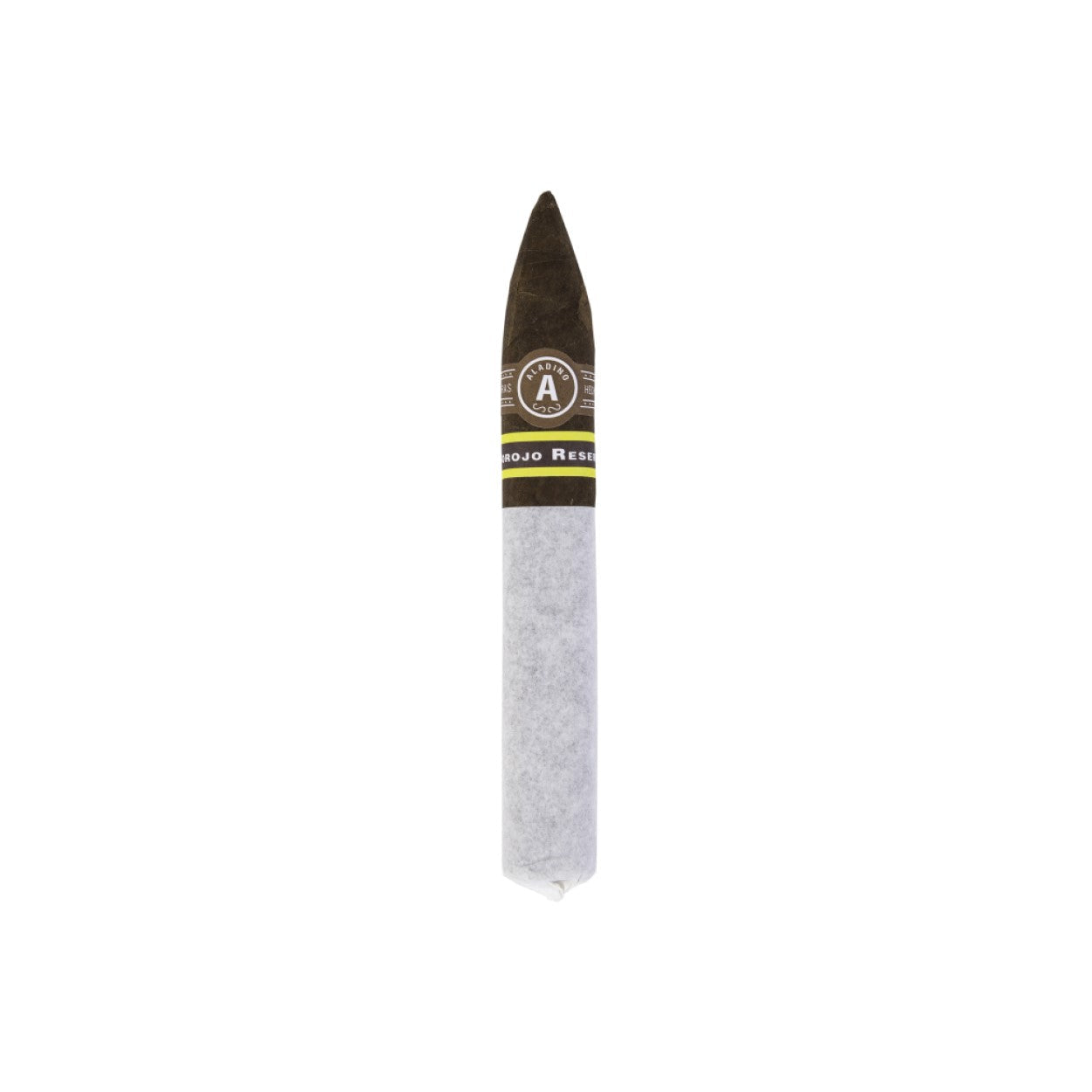
For a focused 45-minute smoke, the Aladino Corojo Robusto (a classic 5 x 50 format, roughly 127mm by 19.8mm ring gauge) is the benchmark. If you prefer a slimmer, slightly more refined draw, the Aladino Corojo Reserva No. 4 uses more mature reserva leaf for added depth in a corona-style frame. And when you have time to savour, the tapered Aladino Corojo Reserva Figurado concentrates the smoke through its closed head, intensifying the aromatics on the front third.

How do the Cameroon and Connecticut lines differ?
Aladino's wrapper choice changes the cigar's personality while the Honduran core keeps the family signature.
The Cameroon line
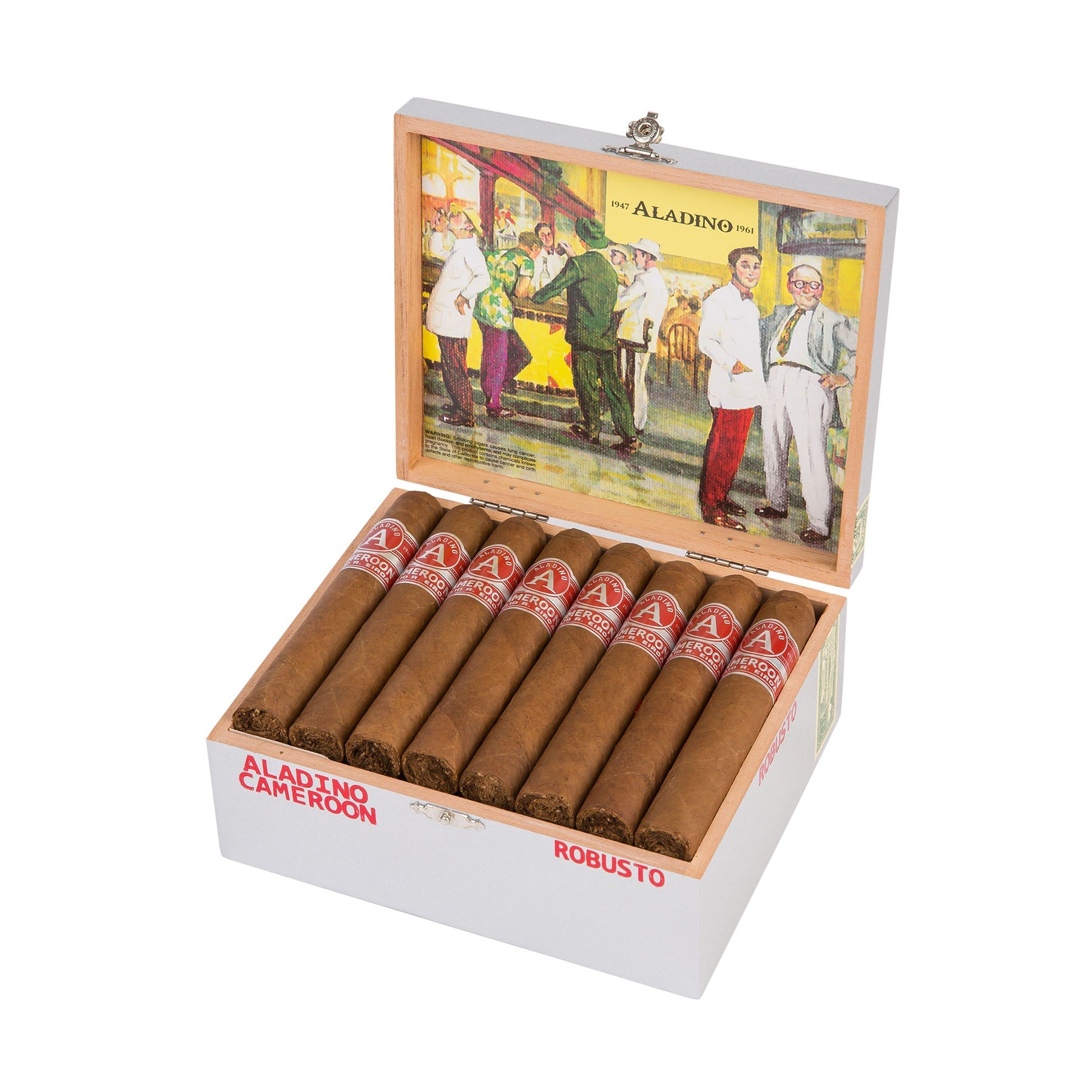
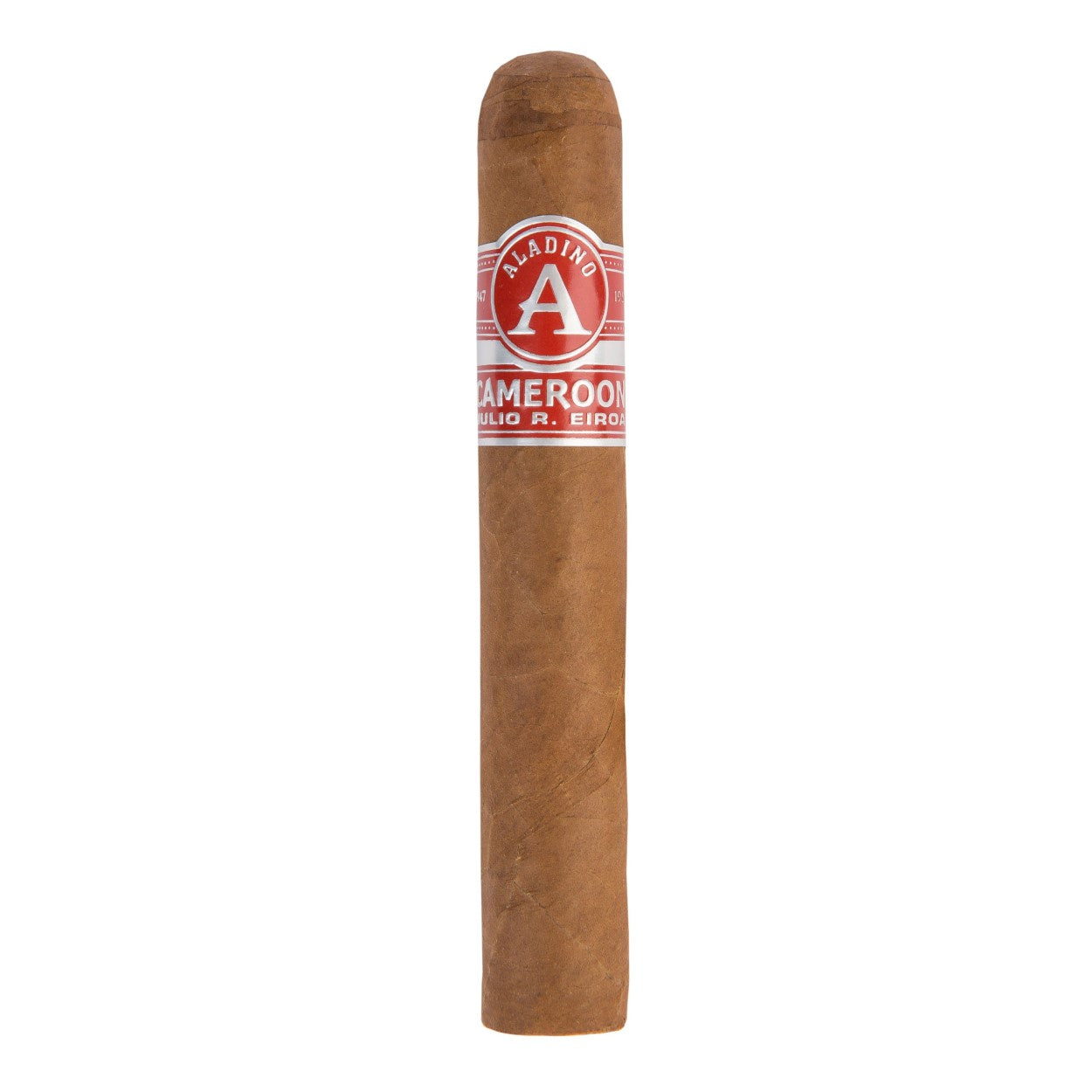
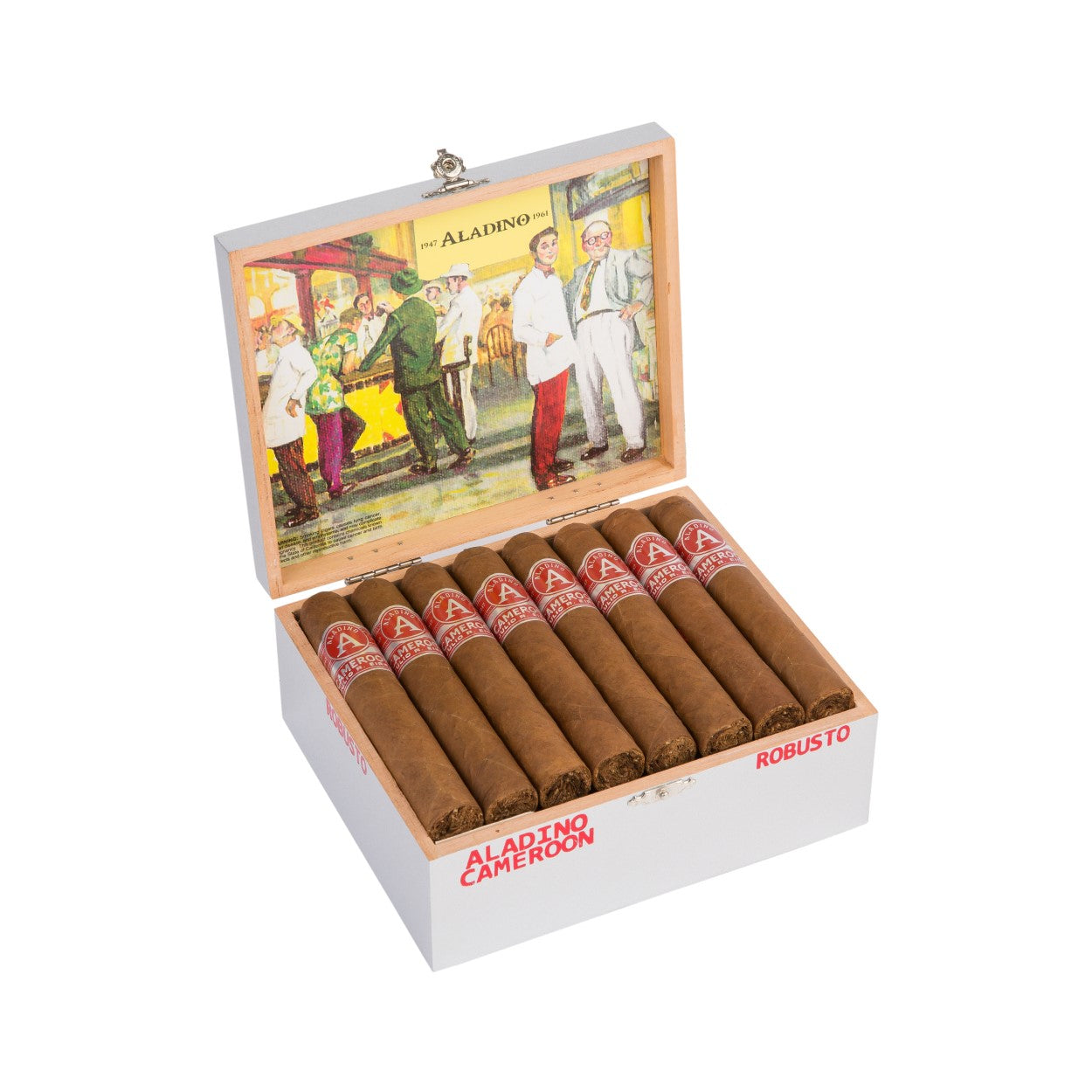
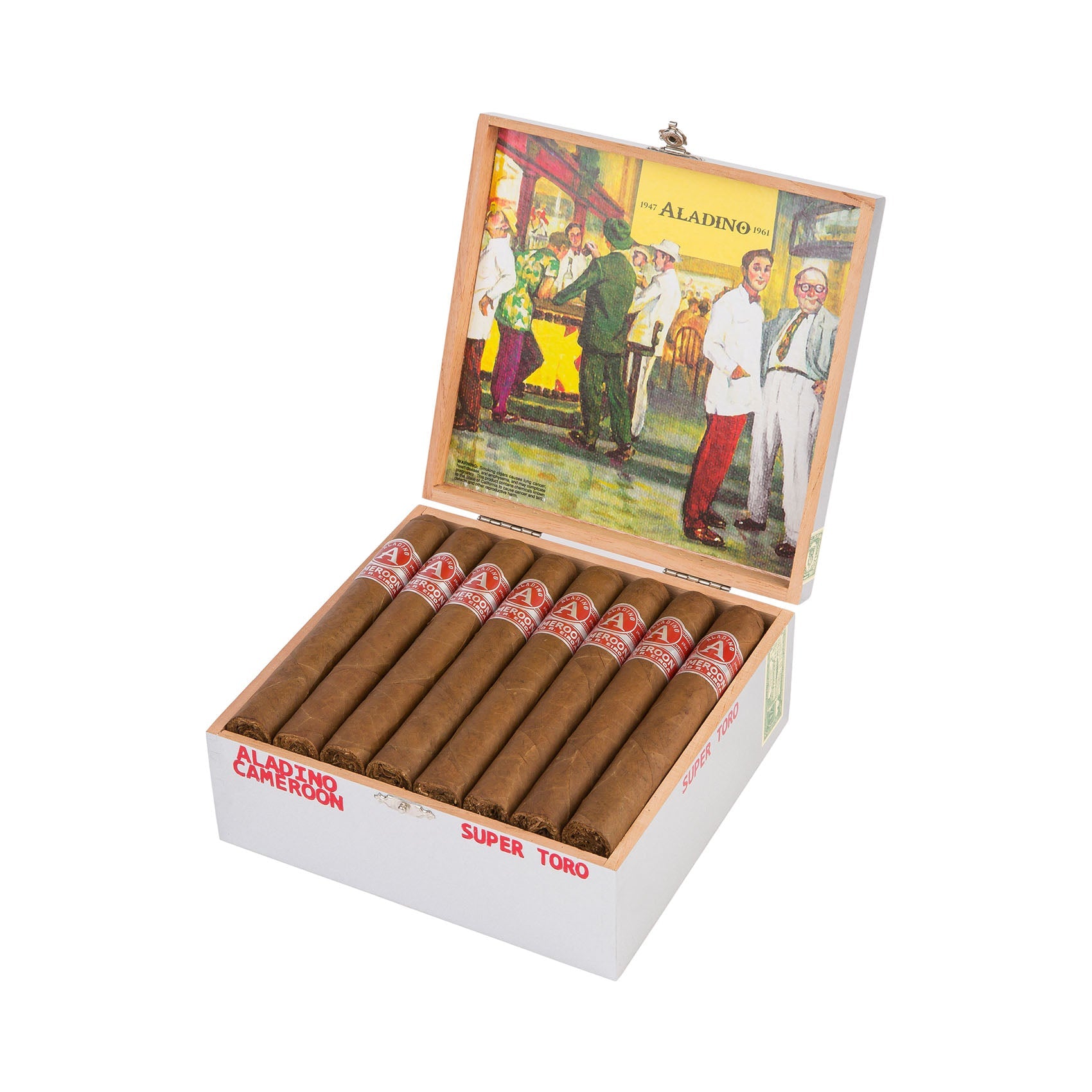
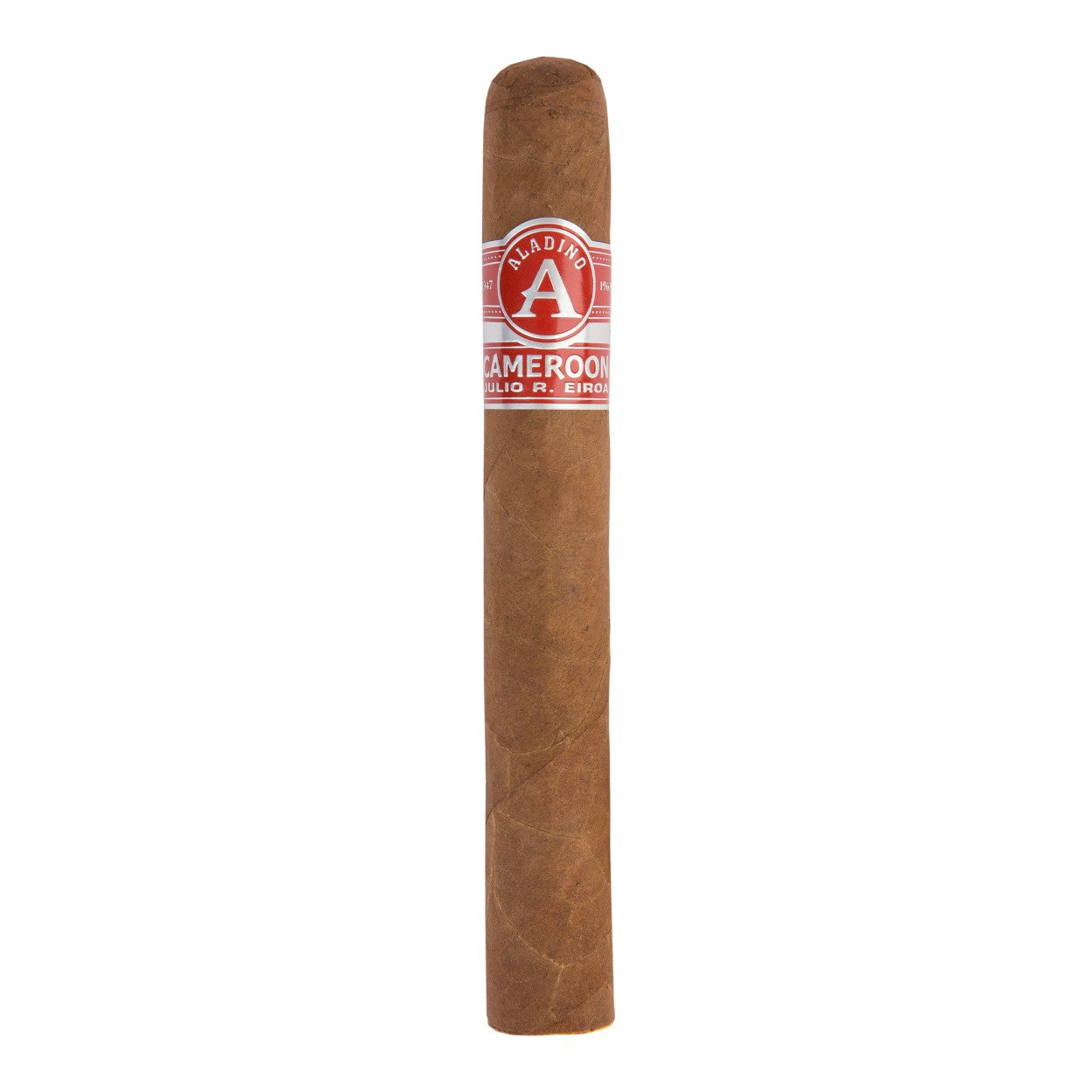
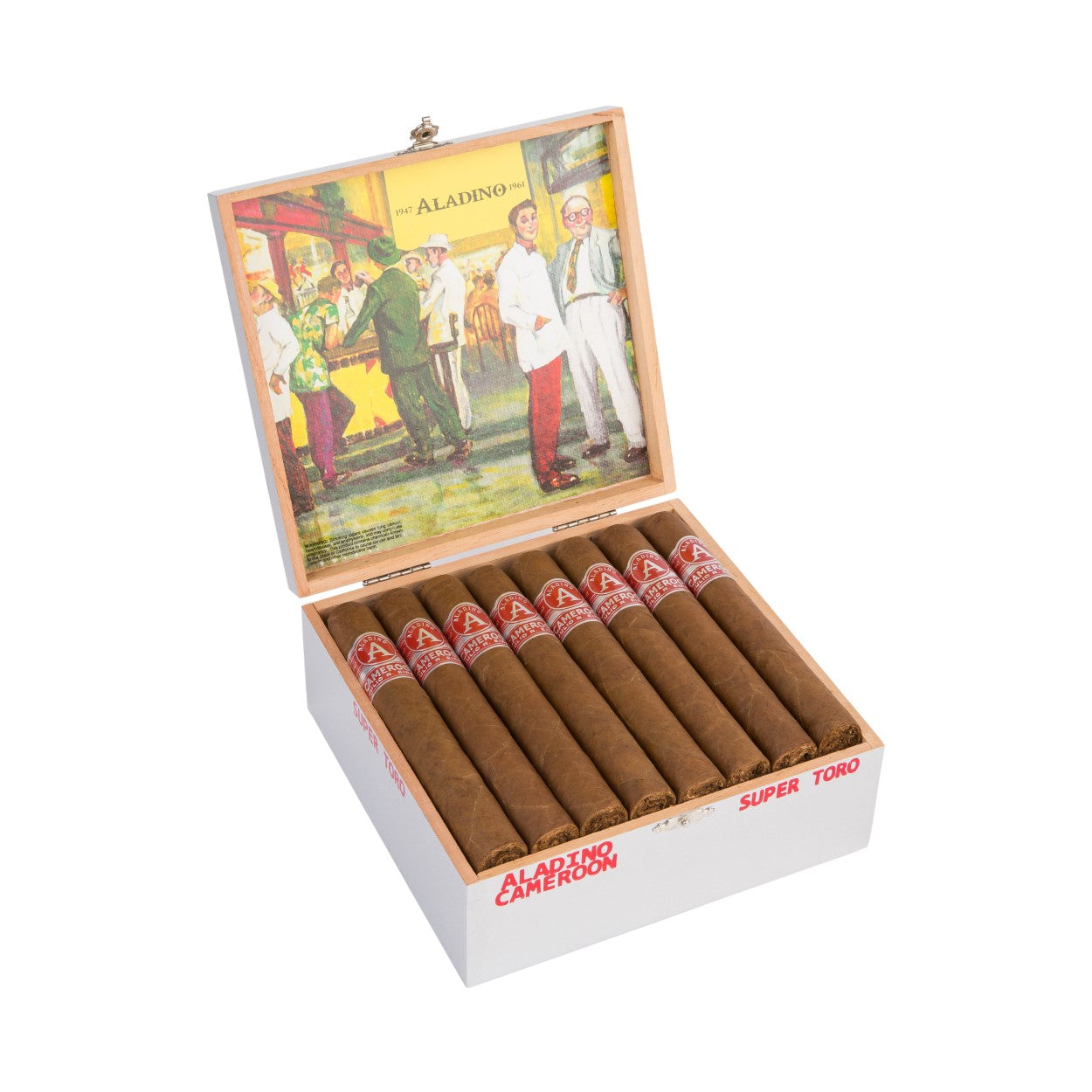
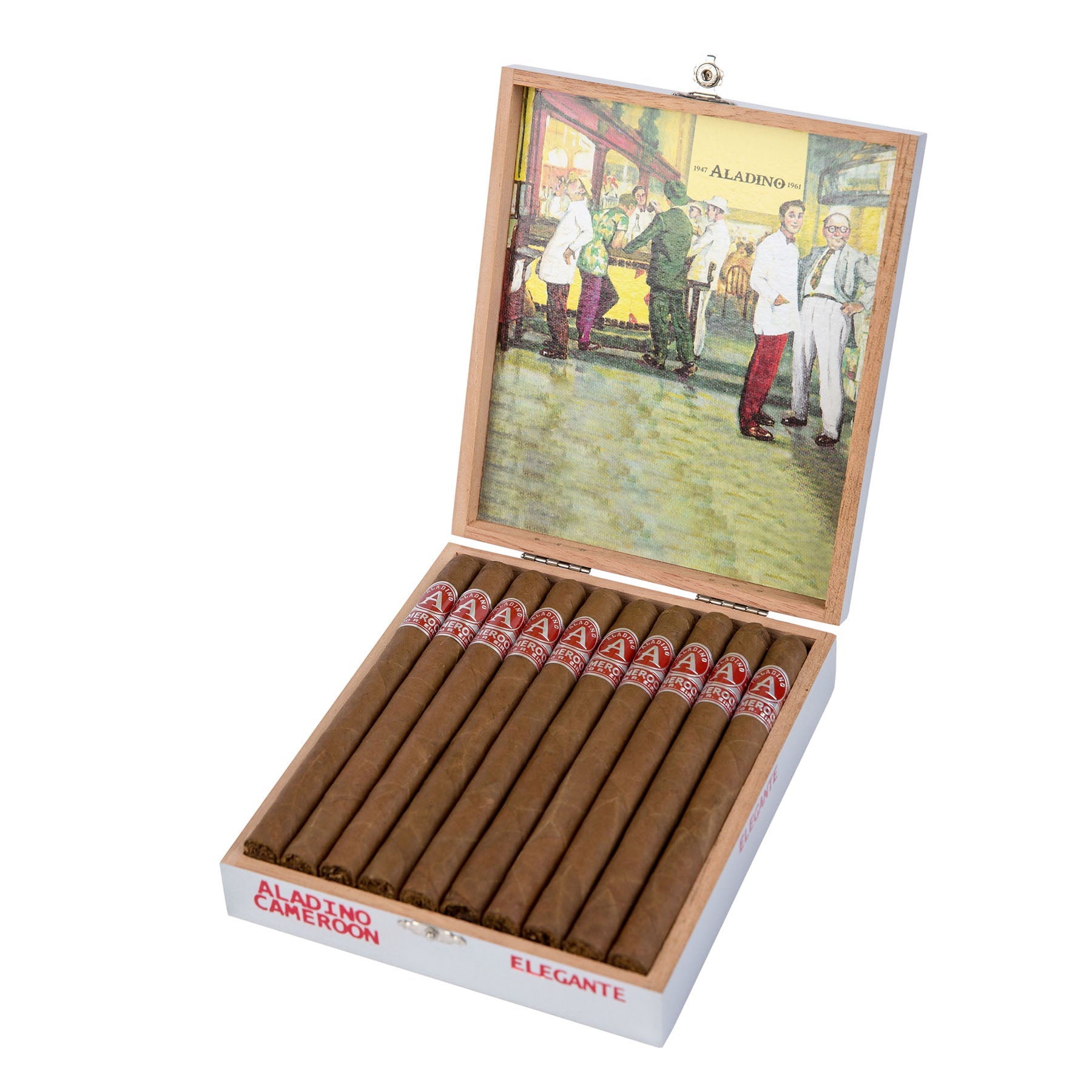
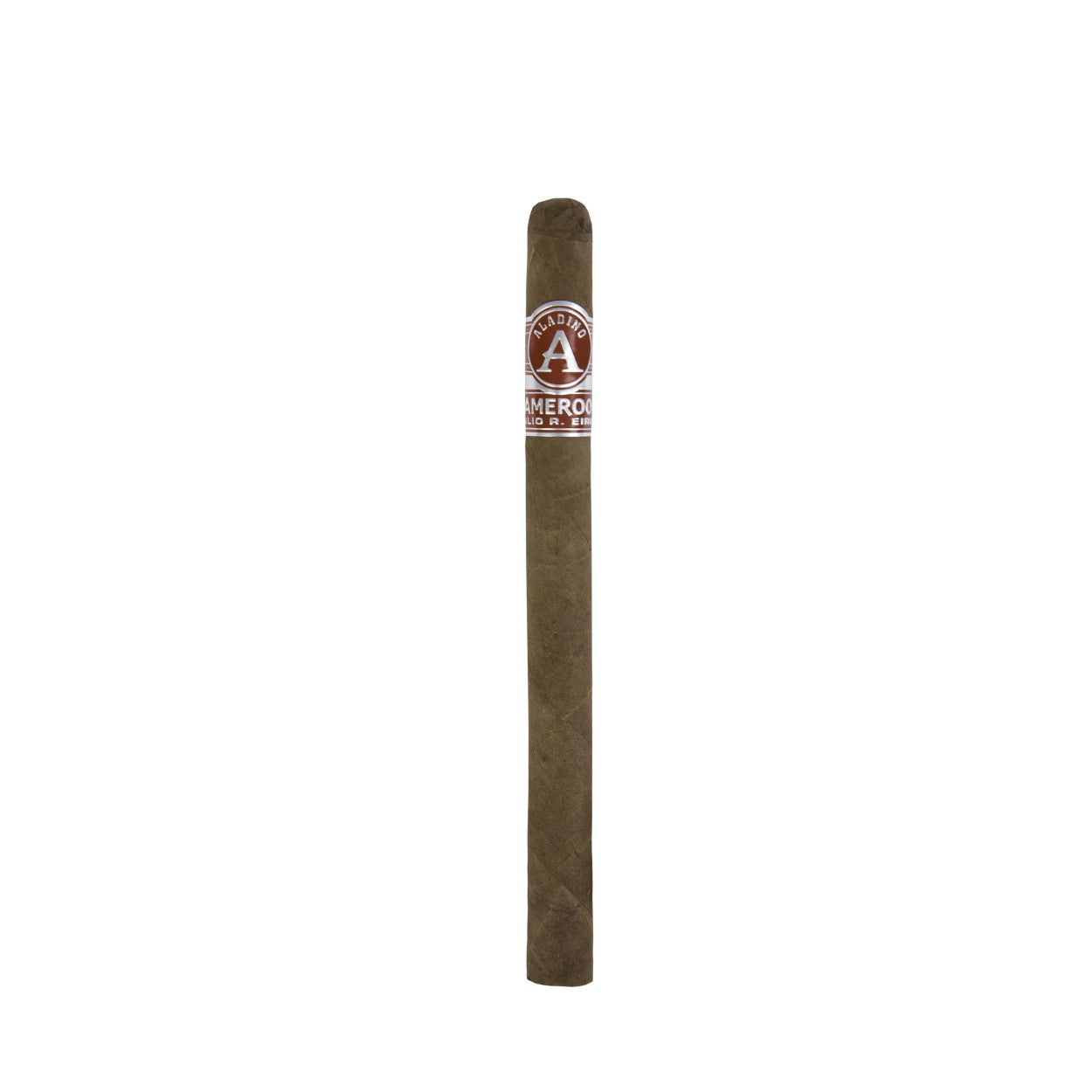
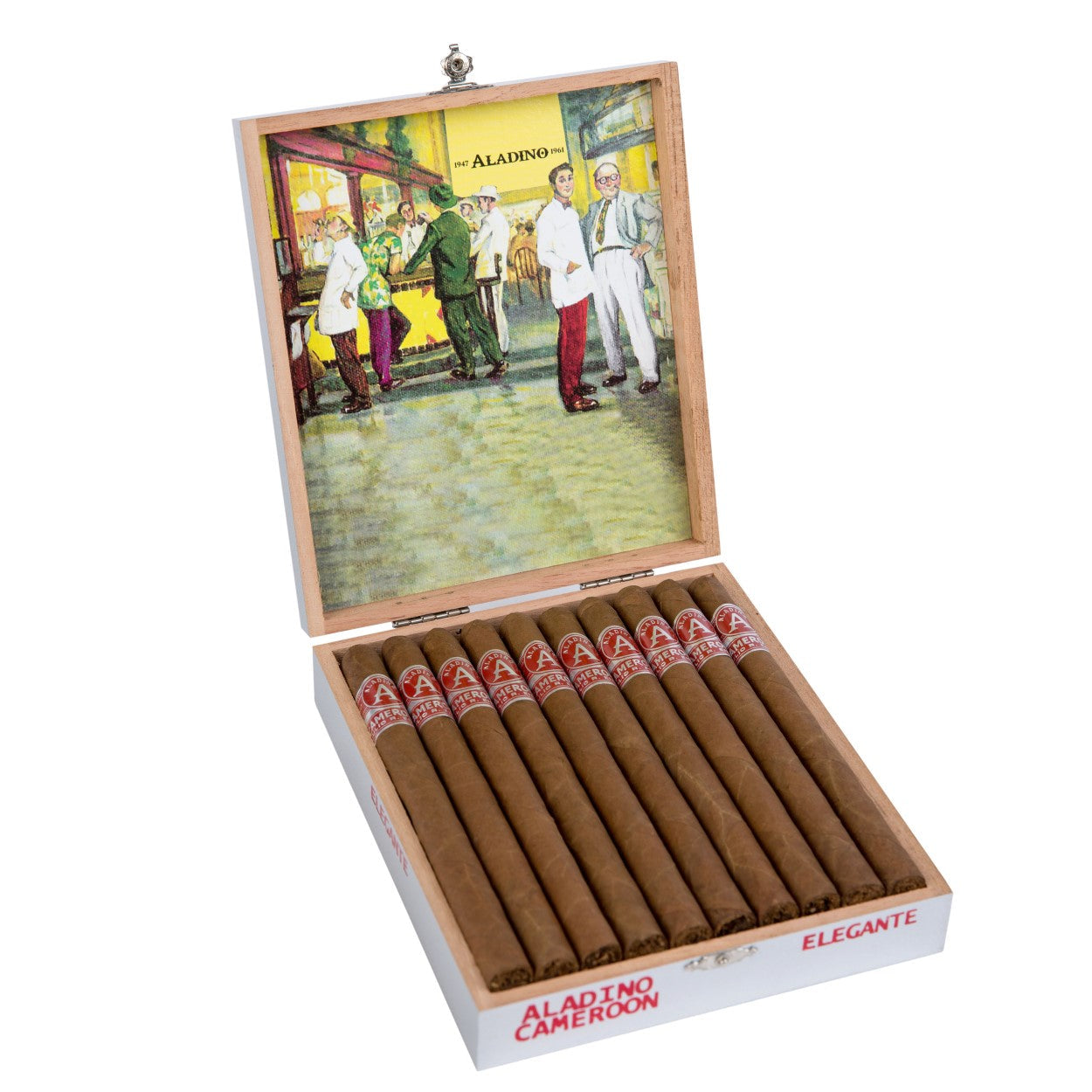
African Cameroon wrapper brings a fine tooth and a distinctive spice — think white pepper, cinnamon and a toasty, walnut-like sweetness over the Corojo base. It sits around medium to medium-full. The Aladino Cameroon Robusto is the easiest entry point; the Aladino Cameroon Super Toro offers a larger, cooler-burning canvas for a longer sitting; and the elegant Aladino Cameroon Elegante lancero-style format pushes wrapper flavour to the fore for experienced palates.
The Connecticut line
Shade-grown Connecticut wrapper makes this the mildest, creamiest Aladino — buttery, with notes of almond, hay, light cedar and a touch of citrus. It is the ideal morning cigar or a gentle introduction for newcomers. The full-bodied smoker's small-format favourite is the Aladino Connecticut Santi, a short quick smoke; the Aladino Connecticut Toro (6 x 50, around 152mm) is the all-rounder; and for an unhurried evening the 7-inch Aladino Connecticut Churchill delivers an hour-plus of creamy calm.
Which Aladino should you choose for the occasion?
- Morning or after breakfast: a Connecticut, smoked with coffee — the Aladino Connecticut Queen's Perfecto is a charming, characterful smaller format.
- Midday, with limited time: the Corojo Robusto or a Connecticut Santi.
- After dinner, with an aged rum or single malt: the Corojo Reserva Figurado or Cameroon Super Toro.
- A long, contemplative evening: the Connecticut Churchill for mildness, or the Corojo Robusto if you want more body.
Aladino sits proudly within our wider New World cigars selection, and it is one of the clearest demonstrations of how a great non-Cuban can hold its own. If you are weighing styles, our piece on Cuban vs New World cigars is a useful companion. Newcomers drawn to the Connecticut line should also read our guide to the best mild cigars.

How should you store and smoke Aladino?
Like all premium handmade cigars, Aladino rewards patient storage. Keep your humidor at 68–72% relative humidity and a steady temperature around 18–20°C. Because these are well-fermented, estate-aged tobaccos, a box that has rested a few weeks after arrival will smoke noticeably more harmoniously than one lit straight away.
Use a clean, decisive cut — a guillotine for the parejo shapes, and a slightly shallower cut on the figurado and perfecto heads to protect the taper. Light gently and toast the foot fully before the first draw. With the fuller Corojo and Cameroon vitolas, smoke slowly; rushing raises the temperature and flattens the very sweetness that makes Aladino special.
Frequently asked questions
Is Aladino a Cuban cigar?
No. Aladino is a Honduran puro, made entirely from tobacco grown by the Eiroa family in the Jamastran Valley near Danlí, Honduras. What links it to Cuban tradition is its use of Authentic Corojo seed and old-school construction methods, which give it a character many smokers describe as reminiscent of classic Havanas while remaining proudly Honduran.
Are Aladino cigars strong?
It depends on the line. The flagship Corojo is medium to full-bodied but always balanced, never aggressive. The Cameroon line is medium to medium-full with extra spice. The Connecticut line is genuinely mild and creamy, making it the friendliest place for newer smokers to start before exploring the bolder wrappers.
What is the best Aladino cigar for a beginner?
Begin with the Connecticut line for its mild, buttery, approachable profile — the Connecticut Toro is a forgiving, even-burning size. Once comfortable, step up to the Corojo Robusto to experience the brand's signature cedar, leather and dried-fruit sweetness. This progression lets your palate adjust gradually while staying within one trusted family of cigars.
What pairs well with an Aladino Corojo?
The Corojo's sweetness and gentle spice flatter aged dark rum, a lightly peated single malt, or a robust espresso. For something softer, an oloroso sherry works beautifully. The Cameroon line also loves bourbon, while the milder Connecticut sits best with morning coffee, a flat white, or a delicate cognac in the evening.
Share:
Best Value Cuban Cigars: Authentic Habanos Worth Every Franc
What Is a Lancero? The Connoisseur's Vitola